Foundations of Teaching for Learning: Being a teacher
by Commonwealth Education Trust
Professor John MacBeath, Dennis Francis
My comment: It seems that Dr. Francis wants to ask questions instead of giving lectures. Interviweing with Professor MacBearth is jewel of this course. His words are precise and concise and very insightful.
position yourself not only as the teacher but also as the learner. Your learners also to see you as somebody that is committed to life-long learning yourself.
Grading policy:
- Quizzes (Weighting: 40%): There will be four quizzes in total. Each quiz is worth 10% of the final course grade.
- There will be two Peer Reviewed Essays (Weighting: 60%): In weeks two and four, you will have a peer reviewed essay of around 500-700 words to write.
- For the peer review essays, you are expected to grade three other pieces of work. In return three other people will grade your work. You are also expected to grade your own essay after seeing what other people have said. There is a penalty of 20% on your grade if you do not complete the peer assessment process of others and yourself.
You are being asked to grade two aspects of the writing, readability and structure.
During weeks two and four you will be expected to write an essay which you will share with at least three other course members. The essays should be around 500-700 words, equivalent to about one or two pages.
Week One: What is a teacher?
- Video lecture 1: What does a teacher do?
- Video lecture 2: What makes a teacher effective?
- Video lecture 3: How can I best improve my skills?
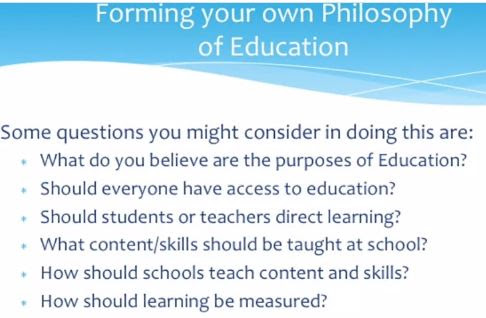
- Video lecture 4: What is a philosophy of education?
Week Two: Myself and My Learning
- Video lecture 1: Thinking about who I am
- Video lecture 2: Why become a teacher?
- Video lecture 3: Understanding my classroom 'selves'
- Video lecture 4: Asking or Telling
- Interview One: Looking at weeks one and two
Week Three: Influences on my learning
- Video lecture 1: The nature and importance of language
- Video lecture 2: Reflective practice
- Video lecture 3: Understanding and dealing with conflict
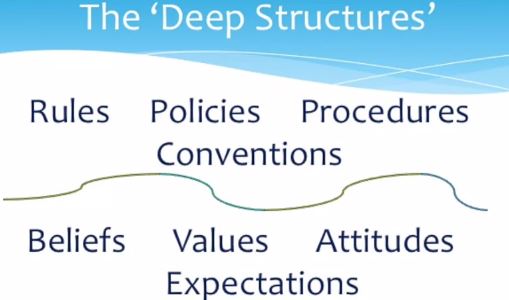
- Video lecture 4: What are my beliefs and values?
Week Four: Impacts on my learning
- Video lecture 1: Celebrating difference
- Video lecture 2: Celebrating difference: Race
- Video lecture 3: Celebrating difference: Gender
- Video lecture 4: Celebrating difference: Disability
- Interview Two: Looking at weeks three and four
Week Five: How do I learn?
- Video lecture 1: Revisiting learning: Brainwaves
- Video lecture 2: What is intelligence?
- Video lecture 3: Environments for learning
- Video lecture 4: Personalising learning in the classroom?
Week Six: My learning environment
- Video lecture 1: Conditions and behaviour settings
- Video lecture 2: How good is my classroom?
- Video lecture 3: A question of motivation
- Video lecture 4: Principles of pedagogy
Week One: What is a teacher?
- about teacher's content knowledge;
- teacher's pedagogical knowledge in terms of what they do;
- the care, in terms of compassion,.
Week Two: Myself and My Learning





what have you learned about yourself by becoming a teacher?
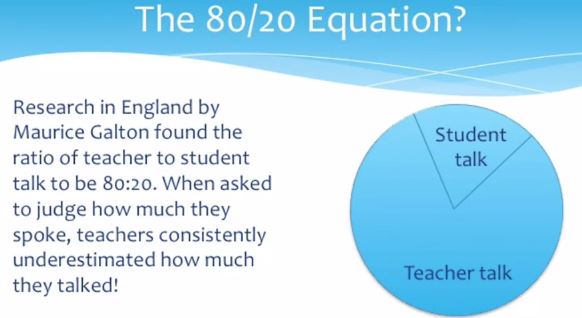
MacBeath: Teaching is a process of learning about yourself.instead of putting the teacher at the center all the time, me, as a teacher, putting the learner at the center. become more learner centered.
Denis: I think 20 years ago, 25 years ago when I started to teach and I think this whole notion of control and be in charge were so important, and as I grew as teacher, professionally and personally, the realization that I needed to let things go and let my teaching become more learner centered. And that's been for me the biggest learning for myself is how to let go and let the teaching be about my learners. Let the focus be on my learners. how do I make them the centre? Shift the control from myself, that is, the staging of the stage to my learners How do you make them the protagonists or the agents of knowledge construction? My learning has been how to let that go and let my learners feel that they are the agents in the knowledge construction.
Our third question is, why do we need to have a philosophy of teaching?
MacBeath:My grandchild at the age of four, he philosophises all the time about reality and life and why we are and why we ask questions and the why why why why why questions? So, philosophy for five years olds just draws on those why questions - why, why, why? - and it builds on that innate curiosity and questioning that children have until we knock it out of them, of course.
Our final question this week for Dennis and John is, what sort of advice do you have for students when they're developing a portfolio?
MacBeath: "I used to think, but now I think..." and that is kind of at the heart of the whole portfolio
Week Three: Influences on my learning
The Three Rs, something we're going to talk about, are Retrospection, Review, and Reorientation.
reflection-on-action, after-the-event thinking; reflection-in-action
Week Four: Impacts on my learning
that oppression and prejudices like racism are learnt behaviors.
Terms commonly used to refer to disabled people sometimes may be offensive. Like, for example, the term I used originally of being "disabled" as compared to being "differently able".
How to handle conflict?
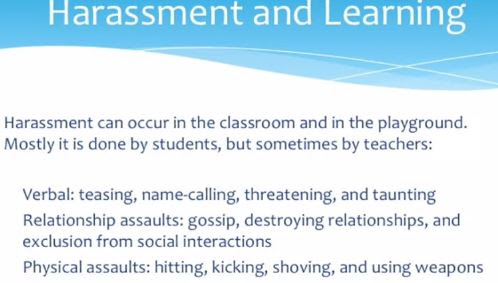
Denis: how do I hold this relationship with the other person in the highest positive regard? How do I look after this relationship? How do I affirm it and build it and grow it? Rather than react and perhaps destroy that relationship. And I've found that a useful way of thinking about dealing with my conflict
John: Sometimes I react. Sometimes I stand back." Now, I think a lot of people would say the primary rule is always to stand back and reflect before you act. But there are times when reacting is actually the right thing to do. And my students would say, "Excuse me, I think you mean never punish in anger." And I said, "No, think about 'punish only in anger'."
Week Five: How do I learn?
Week Six: My learning environment